Did you know that hospital and nursing home patients often need important documents notarized while dealing with major health issues in Portland?
Our team of mobile notary professionals understands these urgent situations. Medical facility patients frequently sign critical paperwork like powers of attorney, advance directives, and healthcare authorizations. These tasks become challenging because patients may feel less alert, experience medication effects, have trouble communicating, or lack proper ID.
Mobile notary services play a vital role despite these obstacles. Most healthcare facilities can’t keep full-time notaries on staff. This creates an urgent need for hospital visit notary services. We’ve witnessed how quick document notarization makes a difference for Health Care Certificates, Power of Attorney forms, wills, and trustee signatures.
This piece takes a closer look at why mobile notary expertise matters when helping vulnerable people. You’ll learn which documents need notarization in these settings and the best ways to provide caring, legally sound nursing home notary service. Let’s get started!
Why Mobile Notaries Are Needed in Hospitals and Nursing Homes
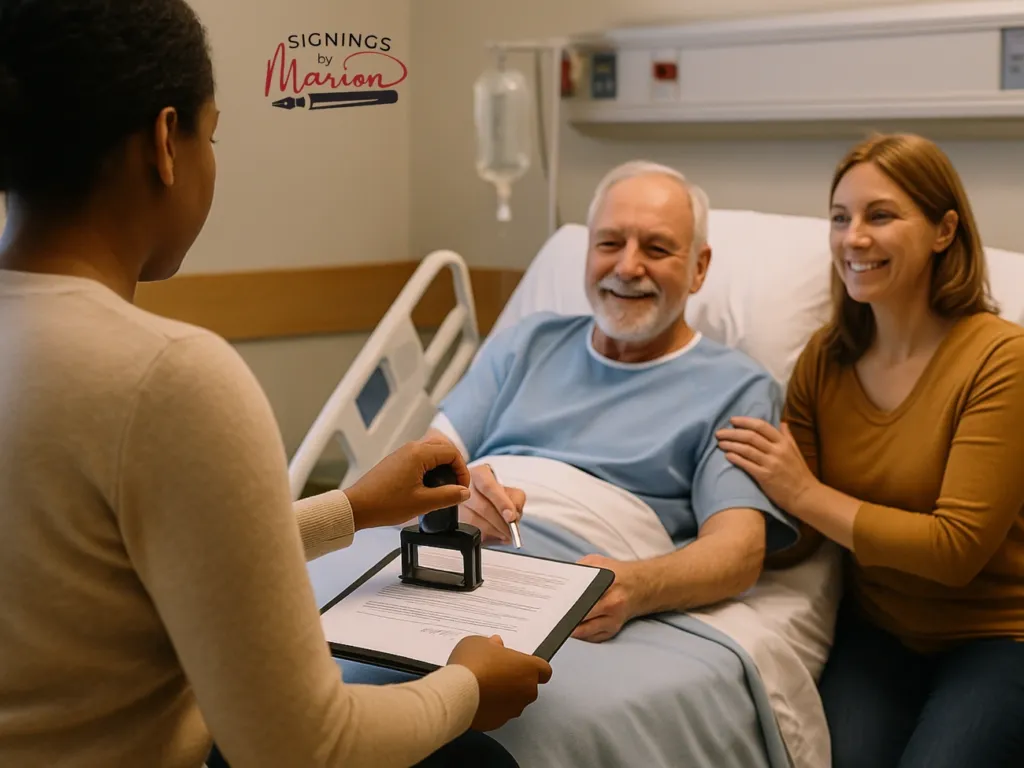
The COVID-19 pandemic showed what mobile notaries already knew – they play a vital role in healthcare settings. During 2020, as visitor restrictions peaked, hospital-based notaries became indispensable to patients who needed document services.
Lack of in-house notaries in medical facilities
Healthcare facilities rarely keep full-time notaries on their staff. This creates a huge service gap, especially when you have many healthcare documents that must be notarized to be legally valid. Families dealing with medical crises find it almost impossible to locate a notary. Mobile notary nursing home services step in to fill this vital need by coming directly to patients.
Urgency of documents like POA and healthcare directives
Time matters greatly in healthcare settings. Patients often need to sign high-stakes documents right away, such as powers of attorney, advance directives, or healthcare authorizations. These documents can drastically affect a person’s rights and medical decisions, which makes proper execution vital. Time-sensitive documents tied to settlement dates or urgent procedures need immediate attention too. A mobile notary for hospital visits will give patients peace of mind that their vital documents are processed quickly, so medical care continues smoothly.
Need for compassionate and flexible service
Patients in medical facilities face unique challenges that need special attention. Many lie weak in bed, hooked up to medical equipment. They might be on medication, feel confused, or struggle physically to sign documents the usual way. These situations call for notaries who can:
- Show patience and care when working with vulnerable patients
- Offer flexible scheduling, including round-the-clock availability for emergencies
- Come prepared with specialized supplies like clipboards or special pens for those with physical limitations
Mobile nursing home notary professionals know their clients are at their most vulnerable. The job takes extra time, compassion, and skill beyond basic notary training. This comprehensive approach helps meet patients’ legal needs with dignity and care, even in tough situations.
Key Documents Handled by Nursing Home Notary Services
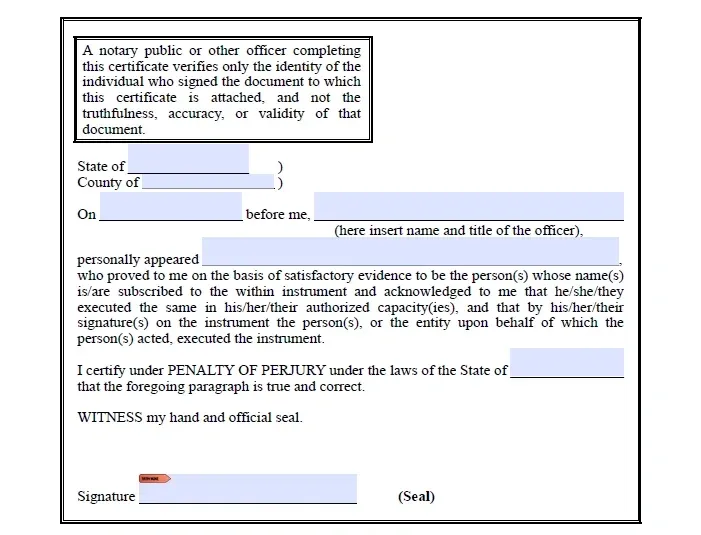
I often see several important documents that need notarization while serving clients in medical facilities. These documents shape life-changing decisions for patients and their families, so we must get everything right.
Durable Power of Attorney
A Durable Power of Attorney (DPOA) stays valid even if the principal becomes incapacitated and covers both financial and legal affairs. My experience as a mobile notary nursing home professional shows this document’s significance because it lets someone make decisions for patients who can’t communicate their wishes. California law requires a DPOA to be notarized or signed by two witnesses. People prefer notarization because it confirms identity and lowers fraud risk. The law makes notarization mandatory for granting durable powers under California Probate Code §4121.
Living Will and Health Care Proxy
California combines Living Wills and Health Care Proxies into a single form called an Advance Health Care Directive (AHCD). This vital document helps patients outline their healthcare priorities and choose a healthcare agent. The directive needs signatures, dates, and either two adult witnesses or notarization. Skilled nursing facility residents need an extra step – a patient advocate or ombudsman must witness the document. This rule applies whatever the verification method to make sure patients understand and agree with their healthcare decisions.
HIPAA Waiver and Trust Certifications
HIPAA Authorization Forms let healthcare providers share medical information with specific people. My nursing home notary service ensures these authorizations meet federal rules. They must include details about protected health information, named recipients, clear purposes, patient signatures, and expiration dates. Trust certification documents often need notarization if patients want trustees to handle property or money. Mobile notary hospital visits help verify these documents properly to prevent family or healthcare provider disputes.
How to Perform a Mobile Notary Job in a Medical Setting

Notarizations in medical facilities go beyond standard notary training and require specialized approaches. Medical patients face unique challenges that just need both compassion and strict adherence to legal requirements.
Verify identity and mental capacity
The first step involves confirming the signer’s identity through valid government-issued identification. Many patients don’t have their ID at the hospital or nursing home. Notaries must know their state’s rules about acceptable alternatives, such as credible witnesses who can verify identity.
Mental capacity assessment carries equal importance. I talk with patients in everyday conversation and ask casual questions about the document to determine if they understand what they’re signing. Nurses or social workers help me evaluate the patient’s condition when I’m uncertain. My notary journal contains detailed documentation of the signer’s behavior and awareness for every nursing home notary service.
Follow state laws for alternative signatures
My experience as a mobile notary for hospital visits reveals many patients cannot sign normally. State laws typically provide alternatives – patients may sign with an “X” or thumbprint with witnesses present. Some states allow patients to direct another person to sign on their behalf.
I study local regulations before appointments and bring extra tools like clipboards and special pens to help patients with physical limitations.
Ensure the signer is not under duress
Protection of vulnerable signers remains paramount. Family members creating commotion must step out to ensure the patient isn’t pressured. Warning signs include someone urgently requesting notarization while the patient appears confused or unwilling. My journal carefully documents any concerns for proper mobile notary nursing home practice to protect both the patient and myself.
Best Practices for a Smooth and Legal Notarization
A successful career as a mobile notary in healthcare settings relies on proper preparation and a deep understanding of the environment. These essential practices will give you both legal compliance and compassionate service.
Communicate with facility staff ahead of time
I always reach out to the facility to learn their specific policies before appointments. Medical facilities often don’t allow patients to sign documents because of medication effects. Some facilities need special witnesses like ombudsmen for certain documents. I verify whether doctors must confirm a patient’s capacity to sign. This preparation helps avoid any surprises when I arrive.
Bring backup supplies and ID verification tools
A mobile notary professional at nursing homes should carry:
- Extra tools like clipboards and special pens that help patients with physical limitations
- The I.D. Checking Guide® to verify authentic IDs from any state
- A secure, lockable notary bag that protects supplies
These tools help create efficient nursing home notary service appointments even in challenging situations.
Respect privacy and follow HIPAA guidelines
Privacy protection stands paramount for mobile notary hospital visits. My notary journal stays secure under lock and key. I carefully dispose of paper records with personal health information. Personal health information covers more than medical details – it also protects identifiers like Social Security numbers and driver’s licenses.
Conclusion
Mobile notary services are vital for vulnerable patients in hospitals and nursing homes in Portland. My experience serving these facilities has shown me how proper document notarization gives peace of mind during difficult medical situations. Patients dealing with health challenges need professional, compassionate service when they sign critical legal documents that affect their care and financial well-being.
Medical environments present unique challenges, but mobile notaries fill an important gap when healthcare facilities don’t have in-house notarial services. We handle complex situations with patient capacity assessment, alternative signatures, and identity verification while following strict legal compliance. Our work also needs special attention to privacy regulations and facility protocols.
Medical facility notarizations need more than just technical knowledge. They need patience, flexibility, and genuine compassion for people during vulnerable moments. Good preparation makes all the difference – we contact staff beforehand, bring specialized tools, and understand each patient’s unique needs.
The documents we notarize often represent life-changing decisions for patients and their families. Powers of attorney, advance directives, and healthcare authorizations carry great weight. This makes our role as impartial witnesses especially important, so mobile notaries must balance legal requirements with human sensitivity.
Mobile notary professionals who focus on hospital and nursing home visits do more than authenticate documents. In Portland we help ensure that patients’ wishes are properly documented and legally protected during tough times. Behind every signature is a person who deserves dignity, respect, and peace of mind knowing their important affairs are handled properly.
FAQs
Q1. Are notary services available in nursing homes?
While some nursing homes may have notary services available, many do not have full-time notaries on staff. This is why mobile notary services are often called upon to visit nursing homes and provide notarization for residents who need important documents signed.
Q2. What types of documents typically require notarization in healthcare settings?
Common documents that require notarization in healthcare settings include Durable Power of Attorney, Advance Health Care Directives (which combine Living Wills and Health Care Proxies), HIPAA Authorization Forms, and Certifications of Trust.
Q3. How do mobile notaries verify the identity of patients in hospitals or nursing homes?
Mobile notaries typically verify identity through government-issued ID. However, when patients don’t have ID available, notaries may use alternative methods allowed by state law, such as credible witnesses who can verify the patient’s identity.
Q4. What special considerations do mobile notaries need to keep in mind when working in medical facilities?
Mobile notaries working in medical facilities need to be aware of patient privacy regulations, facility-specific policies, and the potential need for special witnesses. They also need to assess the patient’s mental capacity and ensure the patient is not under duress when signing documents.
Q5. How much does a mobile notary service typically cost for hospital or nursing home visits?
The cost of mobile notary services for hospital or nursing home visits can vary depending on factors such as location, time of day, and complexity of the notarization. It’s best to contact local mobile notary services for specific pricing information, as rates can differ significantly between providers and regions.