
Did you know that if you have a disability and cannot physically sign your name, there are several legal options for notarizing documents in Lake Oswego?
A notary must follow specific state laws when working with blind people or those who have physical limitations. Some states require notaries to read the entire document to blind signers. People who cannot sign have multiple options available – they can use powers of attorney, representative signers, signature by mark, or ask someone else to sign as directed.
States have different requirements. California and Florida require two witnesses to be present if someone makes a signature by mark. Florida law allows notaries to sign on behalf of people with physical limitations, but this must happen in their presence with two impartial witnesses.
Proper notarial acts depend on understanding these requirements. This piece explains the available methods to notarize documents if you have physical limitations. You’ll learn state-specific rules and best practices that ensure legally binding notarizations while preserving every signer’s dignity.
Understanding Representative Signers
What is a representative signer?
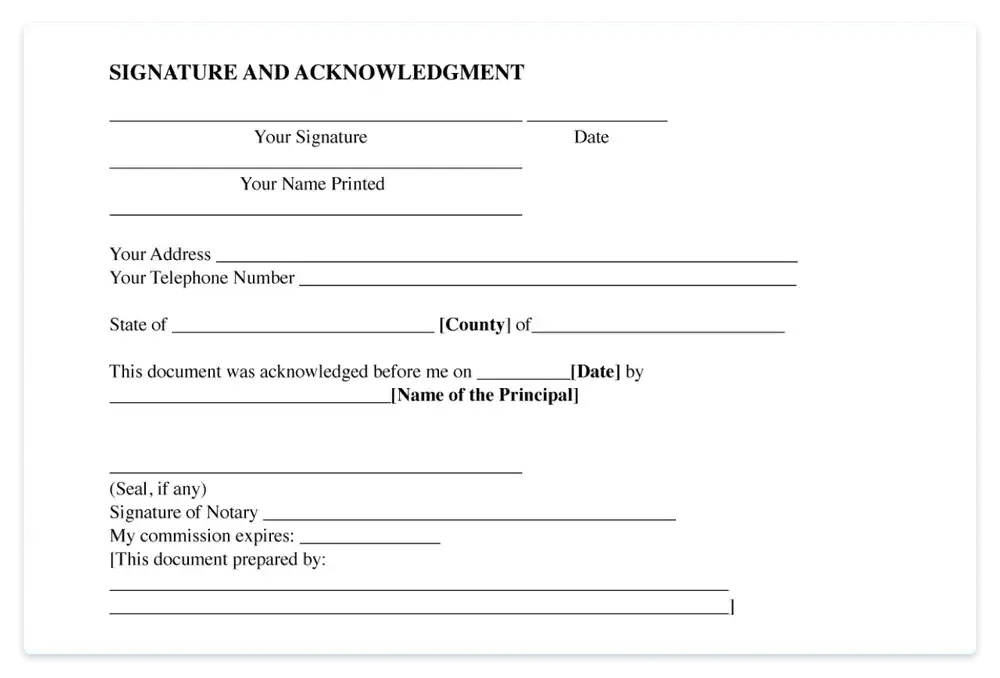
Representative signers are a great way to get help if you have physical impairments that prevent you from signing documents. A representative signer acts as an authorized agent who signs documents on behalf of another person or legal entity. People often refer to this arrangement as signing in a “representative capacity.”
Common types of representative signers include:
- An attorney-in-fact signing under a power of attorney
- A corporate officer signing business documents
- An authorized officer signing for an organization, partnership, or government agency
Representative signers act as the legal extension of the principal (the person being represented). This allows important documents to be executed despite physical limitations.
When to use power of attorney
Power of attorney documents are the foundations of representative signing arrangements. This legal instrument lets someone (the agent or attorney-in-fact) perform duties on behalf of another person (the principal).
These arrangements work well if you have physical disabilities that prevent you from signing documents. The attorney-in-fact can sign the principal’s name and have that signature notarized once the power of attorney is in place. The principal doesn’t need to be physically present.
The representative usually signs with both names in one of these formats: “John Doe, attorney in fact for Mary Sue, principal” or “Mary Sue, by John Doe, attorney in fact”.
State-specific rules and certificate wording
State laws about representative signers vary substantially across the country. States like Colorado, Florida, Nevada, Oregon, Pennsylvania, and Texas require notaries to use specific certificate wording for representative signatures. California notaries must use the same acknowledgment wording whatever the person’s signing capacity.
Some states need verification of the representative’s authority. Utah requires representative signers to show evidence of their authority or provide a sworn statement confirming proper authorization. Hawaii, Idaho, and Montana require notaries to verify authority through personal knowledge or written proof.
All but one of these states share a critical limitation: an attorney-in-fact cannot take an oath for the principal. Illinois stands alone in allowing signers to take oaths in a representative capacity. Other states require the attorney-in-fact to swear in their own name only, not the principal’s, when a jurat is needed.
Using Signature by Mark
Using Signature by Mark
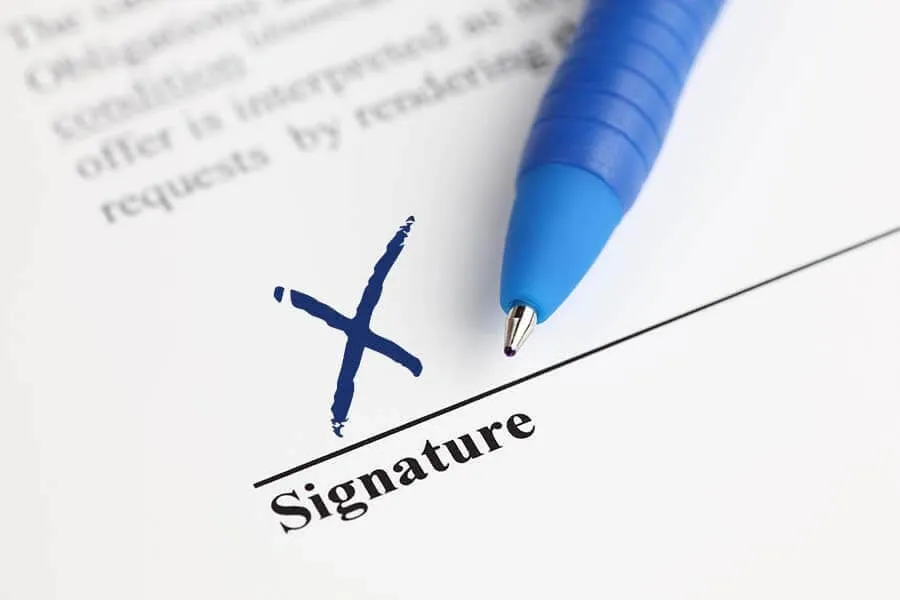
A signature by mark offers an alternative way to sign documents if you have physical impairments that prevent you from signing your name. You can make a mark—usually an “X” or another symbol—on the document instead of writing a full signature.
Who qualifies for signature by mark
States have different rules about who can use a signature by mark. We designed this option to help people who cannot physically write their names. States like Arkansas, California, Illinois, and Oklahoma limit this option to people with physical impairments. Arizona takes a more flexible approach and lets notaries accept a thumbprint or “X” mark even from people without disabilities.
The notary statutes in Indiana, Maine, and Texas don’t separate signatures from marks. You can get your mark notarized without extra steps in these states.
Witness requirements by state
The witness requirements are nowhere near the same in different jurisdictions:
- Single witness required: Arizona and Montana
- Two witnesses required: California, Illinois, Massachusetts, Missouri, and Rhode Island
- One witness with no interest in the document: Arkansas
- Two disinterested witnesses: Florida and Nebraska
North Dakota doesn’t strictly require witnesses but suggests having at least one present. Notaries should not act as witnesses unless the law specifically allows it.
How to document the mark properly
You need to follow specific steps to document a signature by mark:
Check the signer’s identity through acceptable evidence. The signer then makes their mark on the document. A witness writes the signer’s name next to the mark and signs their own name.
Some states need extra documentation. Pennsylvania suggests writing “his/her mark” below the signature line. Notaries in North Carolina and South Carolina must write “Mark affixed by (name of signer by mark) in presence of undersigned notary”.
The mark must appear in your notary journal. A witness writes the signer’s name beside it. This gives you a complete record and keeps the document legally valid.
Signature by Proxy: When Someone Else Signs
Signature by proxy is a great way to get solutions if you have complete inability to write or make any mark. My experience as a notary shows this quickest way helps everyone participate in legal transactions.
What is signature by proxy?
A signature by proxy happens when another person signs a document for someone with physical impairments who can’t write. The disabled person directs someone at the notarization to sign for them. This differs from a power of attorney arrangement. The proxy gets no decision-making authority or legal powers beyond just signing the document.
Who can act as a proxy signer
State laws determine whether the notary or a third party can serve as the proxy signer:
- The notary can sign on the disabled person’s behalf in Florida, Michigan, and Texas
- A third party (not the notary) must sign as proxy in Colorado, Minnesota, Montana, and Oregon
- North Carolina requires a disinterested third party as the proxy signer
Witness and presence requirements
Each jurisdiction has different witness requirements:
Florida needs two disinterested witnesses during proxy signing. Texas requires just one disinterested witness with proper identification. Michigan doesn’t ask for extra witnesses for proxy signatures. The physically disabled person must be present and clearly communicate their intention to the notary before any proxy signing.
States that allow or prohibit proxy signing
Many states have specific rules about proxy signing. Florida, Michigan, Texas, Hawaii, Colorado, Minnesota, and North Carolina have clear statutory guidelines. Pennsylvania and Virginia haven’t provided statutory guidance for signature by proxy. California lets proxy signing happen only for power of attorney documents under specific conditions in Probate Code 4121.
The documentation must include statements that indicate who signed as proxy, such as “Signature affixed by (name) at the direction of (disabled person’s name)”.
General Rules for Notarizing Disabled Signers
Some basic requirements stay the same if you have physical impairments that need notarization.
Verifying identity and willingness
You need proper identification, whatever your disability might be. Every signer must show acceptable ID based on state laws. Areas without specific ID requirements need government-issued photo ID with signatures that meet professional standards. The notary should talk with the signer to understand if they know what they’re signing and want to do it. Reading documents out loud helps blind signers know what’s in them.
Ensuring document completeness
You need to get a full picture of the documents before moving forward. The signer should cross out empty spaces or mark them “not applicable”—the notary can’t do this. All signatures must be original and in ink, with no signing ahead of time. Take a good look at each page to make sure nothing is missing.
Recording in the notary journal
The journal needs extra details when working with physically impaired signers. Record:
- Date and time of notarization
- Type of accommodation provided
- Names of any witnesses present
- Method of signing (mark, proxy, etc.)
Using proper notarial wording
States often need specific certificate language for different signing methods. Proxy signatures need phrases like “Signature affixed by (name) at the direction of (disabled person’s name)” under the signature. You should look up your state’s rules ahead of time to make sure everything follows legal standards.
Conclusion
Notarizing documents for physically impaired individuals needs careful attention to legal steps while treating all signers with respect and dignity, especially when providing services in Lake Oswego. Let me share several ways to help when standard signing isn’t possible.
A power of attorney arrangement lets representative signers act as authorized agents for people who can’t sign. On top of that, signature by mark gives people the option to use a simple “X” or other mark to sign documents. The witness requirements vary by a lot between states.
Some people can’t make any mark at all. In these cases, signature by proxy becomes a legal option. Each state has its own laws about who can be a proxy and what conditions apply. Whatever method you choose, you must verify IDs properly and document everything in your notary journal.
Your state’s specific requirements are a vital part of the process. You need to know your state’s notarial laws before offering these specialized services.
We notaries must make sure physically impaired signers can take part in legal transactions fully. Legal compliance needs to be balanced with compassion and respect. These alternative methods help create a more inclusive notarial practice that serves everyone in our communities, whatever their physical abilities may be.
FAQs
Q1. How can a blind person sign a document for notarization?
A blind person can sign a document by having it read aloud to them in the presence of the notary and witnesses. The blind individual may then make their mark on the document, or a witness can sign on their behalf. Some states may require specific procedures, such as using a signature guide to assist the blind person in signing.
Q2. What options are available for notarizing documents when the signer has physical impairments?
There are several options for notarizing documents for physically impaired signers, including using a representative signer with power of attorney, signature by mark (typically an “X”), or signature by proxy where someone else signs on behalf of the impaired individual. The specific method used depends on state laws and the signer’s capabilities.
Q3. Are witnesses required for notarizing documents signed by physically impaired individuals?
Witness requirements vary by state and the method of signing used. For example, some states require two witnesses for a signature by mark, while others may only require one. It’s important to check your state’s specific requirements before proceeding with the notarization.
Q4. Can a notary sign on behalf of a physically impaired person?
In some states, such as Florida, Michigan, and Texas, a notary can sign on behalf of a physically impaired person who cannot write at all. However, this is not universally allowed, and many states require a third party to act as the proxy signer. Always verify your state’s laws before performing this type of notarization.
Q5. What should a notary record in their journal when notarizing for a physically impaired signer?
When notarizing for a physically impaired signer, the notary should record detailed information in their journal, including the date and time of notarization, the type of accommodation provided, names of any witnesses present, and the method of signing used (e.g., mark, proxy). This ensures a complete record of the transaction and maintains the legal validity of the document.